
Banking is part of everyday life. People check balances, pay bills, transfer money, and apply for loans online. Many customers rarely visit a physical branch. They depend on websites and mobile apps to manage their finances. Because of this, digital access must work for everyone. If a banking website is hard to use for someone with a disability, that person may lose access to essential services. That is not acceptable.
This complete guide to banking accessibility explains what accessibility means in simple terms. It also explains why it matters and how banks can improve their digital platforms step by step. The goal is clear. Every customer should be able to use online banking without barriers.
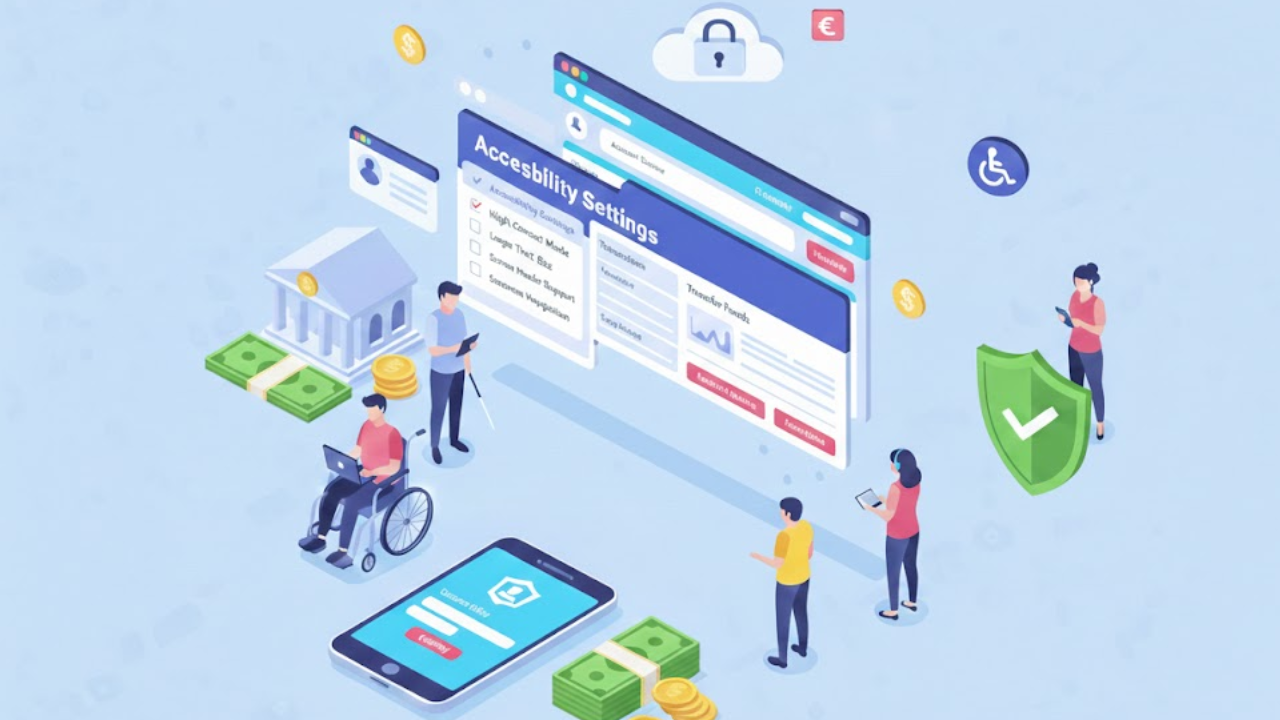
What Banking Website Accessibility Really Means
Banking website accessibility means designing websites so that people with disabilities can use them without difficulty. Disabilities can affect vision, hearing, movement, or learning. Some people use screen readers because they cannot see the screen. Some use only a keyboard because they cannot use a mouse. Others need captions because they cannot hear audio.
If a website ignores these needs, it excludes people. Accessibility removes those obstacles.
Many people look for a clear Bank website accessibility guide because they want simple answers. They want to know what changes are needed. They want to understand what accessible design looks like in practice. The basic idea is this: no one should struggle to access their own money.
Why Accessibility Matters in Banking
Banking is not optional. It is essential. People need access to their accounts to live their daily lives. If a website blocks someone from logging in, transferring funds, or reading statements, that creates serious problems.
Accessibility matters for several reasons. First, it supports equal access. Every customer deserves the same ability to manage their finances. Learn some Reasons ADA Compliance Matters for Your Website.
Second, it builds trust. When customers see that a bank cares about inclusion, they feel respected.
Third, it reduces legal risk. In the United States, a bank website's ADA accessibility is linked to the Americans with Disabilities Ac1t. Courts increasingly treat websites as public services. Banks that ignore accessibility may face complaints or lawsuits.
Fourth, it improves the overall user experience. Clear design and simple navigation help all users, not only those with disabilities.
Accessibility is not just about compliance. It is about responsibility.
Common Accessibility Barriers on Banking Websites
To fix problems, you must first understand them. Many banking websites share similar issues.
One common issue is poor color contrast. If text blends into the background, users with low vision struggle to read it. Dark text on a light background usually works best.
Another issue is the lack of alternative text for images. Screen readers cannot describe images without text descriptions. If a chart shows account data but has no description, blind users miss important information.
Complex forms are also a problem. Banking sites include login forms, transfer forms, and loan applications. If form fields are not labeled clearly, users may not know what information to enter.
Mouse-only navigation creates barriers. Some users rely on a keyboard. If buttons cannot be reached with the tab key, the website becomes unusable for them.
Videos without captions exclude users with hearing loss. Audio explanations must include text captions or transcripts.
These issues may seem small. In reality, they can completely block access.
Key Principles of Website Accessibility in Banking
Accessibility follows clear standards. The most widely used guidelines are the WCAG (Web Content Accessibility Guidelines). These guidelines are built on four main principles.
The first principle is perceivable. Content must be presented in ways users can sense. Text must be readable. Images must include descriptions. Videos must include captions.
The second principle is operable. Users must be able to navigate and interact with the website using different tools. This includes keyboard navigation and assistive technologies.
The third principle is understandable. Instructions should be clear. Language should be simple. Error messages should explain what went wrong and how to fix it.
The fourth principle is robust. The website should work across devices and assistive technologies. It should function properly on desktops, tablets, and phones.
When banks focus on Website accessibility in banking, they use these principles as a foundation.
Step-by-Step Plan to Improve Accessibility
Improving accessibility requires a clear process. It is not a one-day task.
1 : Conduct an Accessibility Audit
Begin with testing. Use must have automated tools to scan for common errors. Then conduct manual testing. Automated tools do not catch everything. Human review is essential.
Include users with disabilities in testing whenever possible. Their feedback is valuable.
2 : Prioritize Critical Areas
Focus first on high-impact areas. These include login pages, account dashboards, and payment systems. If users cannot log in or transfer funds, the system fails them.
Check that:
All buttons have clear labels.
All links describe their purpose.
All form fields have clear instructions.
Error messages explain how to fix mistakes.
3 : Improve Content Simplicity
Banking language is often complex. Simplify it. Use short sentences. Avoid unnecessary terms. Instead of “initiate transaction,” say “start transfer.” Simple language reduces confusion.
4 : Ensure Keyboard Accessibility
Test every page using only a keyboard. If you cannot navigate the full site without a mouse, improvements are needed.
5 : Add Alternative Text and Captions
Every image must include descriptive text. Every video must include captions. Audio content should include transcripts.
These steps form the foundation of a strong Banking website accessibility.
Accessibility and Mobile Banking
Many customers rely entirely on mobile devices. Accessibility must extend beyond desktop websites.
Mobile accessibility includes:
Text that can be enlarged.
Buttons are large enough to tap easily.
Voice command compatibility.
Clear navigation menus.
If a mobile app fails to prioritize accessibility, it excludes users who depend on their phones for banking.
Responsive design must not sacrifice clarity. Small screens should still provide simple layouts and readable text.
Training and Ongoing Monitoring
Accessibility is not a one-time fix. Websites change often. New features are added. Content is updated.
Each update must be reviewed for accessibility. Staff members should receive training on inclusive design. Developers and content creators must understand the basics of accessibility.
Regular web audits should be scheduled. Monitoring prevents small issues from growing into major barriers.
When accessibility becomes part of daily practice, long-term success becomes easier.
The Human Side of Accessibility
Accessibility is about people, not just technology. Imagine a blind user who cannot check their balance because the website lacks proper labels. Imagine a person with limited hand movement who cannot complete a loan application because the form requires mouse clicks.
These situations affect real lives.
Accessible design allows customers to act independently. It protects dignity. It ensures privacy. It allows people to manage their finances without asking for help.
Financial independence is important for everyone. Accessibility protects that independence.
Long-Term Benefits of Accessible Banking Websites
Accessible websites often perform better overall. Clear layouts load faster. Simple navigation reduces confusion. Consistent design builds trust.
Search engines also reward well-structured content. Clear headings and proper labels can improve search performance.
Accessibility supports:
Better usability
Stronger brand reputation
Reduced legal risk
Wider customer reach
It is a smart investment in both ethics and business stability.
Final Thoughts
Banking website accessibility is essential in the digital age. It ensures that every customer, regardless of ability, can manage their finances online. It reduces barriers. It improves user experience. It supports compliance with legal standards.
Improving accessibility requires audits, clear design choices, simple language, and ongoing testing. It requires leadership commitment and staff training.
Organizations that focus on inclusive digital practices, such as Inclusive Web, highlight the importance of making digital banking accessible for everyone. The goal is simple and meaningful. Every person deserves equal access to financial services. When banks commit to accessibility, they protect both their customers and their reputation.
Have Questions?
We Are Inclusive Web
We work with our clients to simplify digital accessibility to ensure your web and digital applications are ADA compliant and accessible to all your users. If you’d like to talk about your digital accessibility, you can email us at matthew@inclusiveweb.co, leave us a note here, or schedule a call here to discuss. Let’s make the web inclusive to all!