
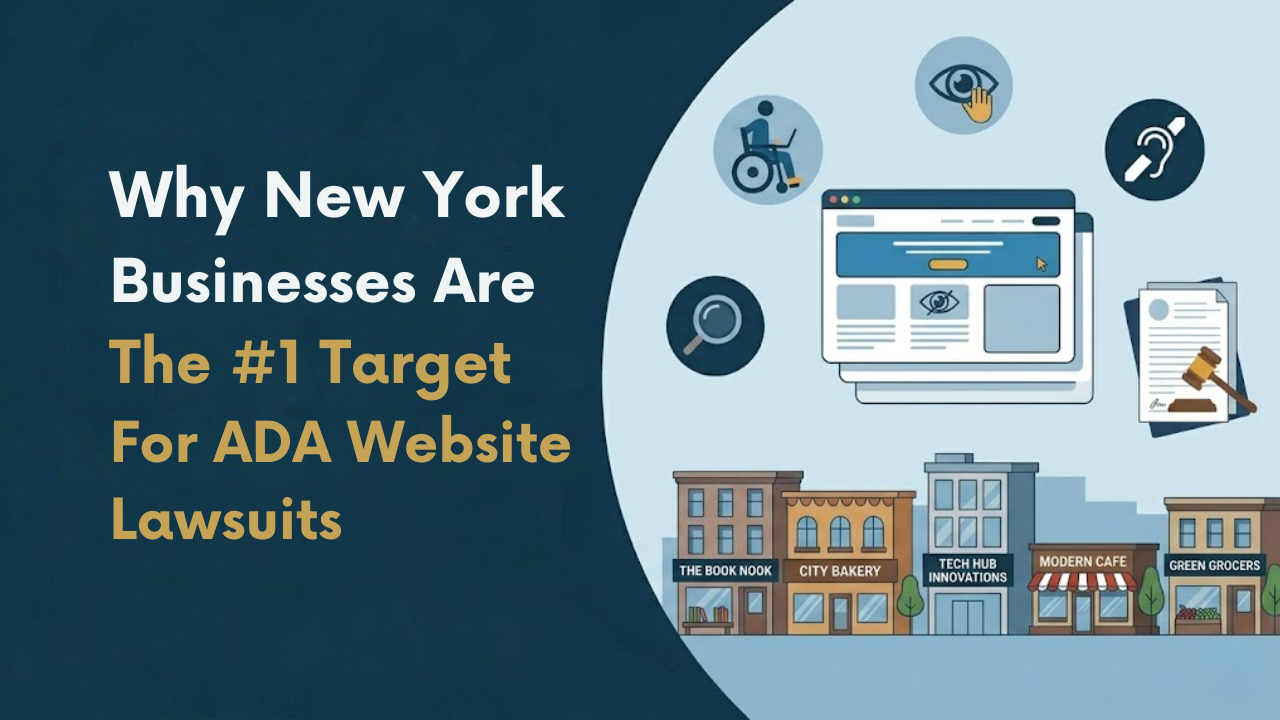
New York leads the entire United States in ADA website lawsuits. Not by a little.
In the first half of 2025, New York accounted for 31.6% of all ADA digital accessibility lawsuits filed nationally - 637 cases in six months. In the middle of this growing concern around web accessibility New York, and here is the detail most businesses miss: 41% of those cases were repeat filings against companies already sued before. Getting hit once and doing nothing does not close the case - it marks you as a target.
New York city accessibility requirements in 2026 are no longer a grey area. New state legislation, a finalized federal rule, and courts consistently ruling against non-compliant businesses have made the compliance picture clear. What remains unclear for most businesses is exactly what applies to them and where to start.
This guide gives you both.
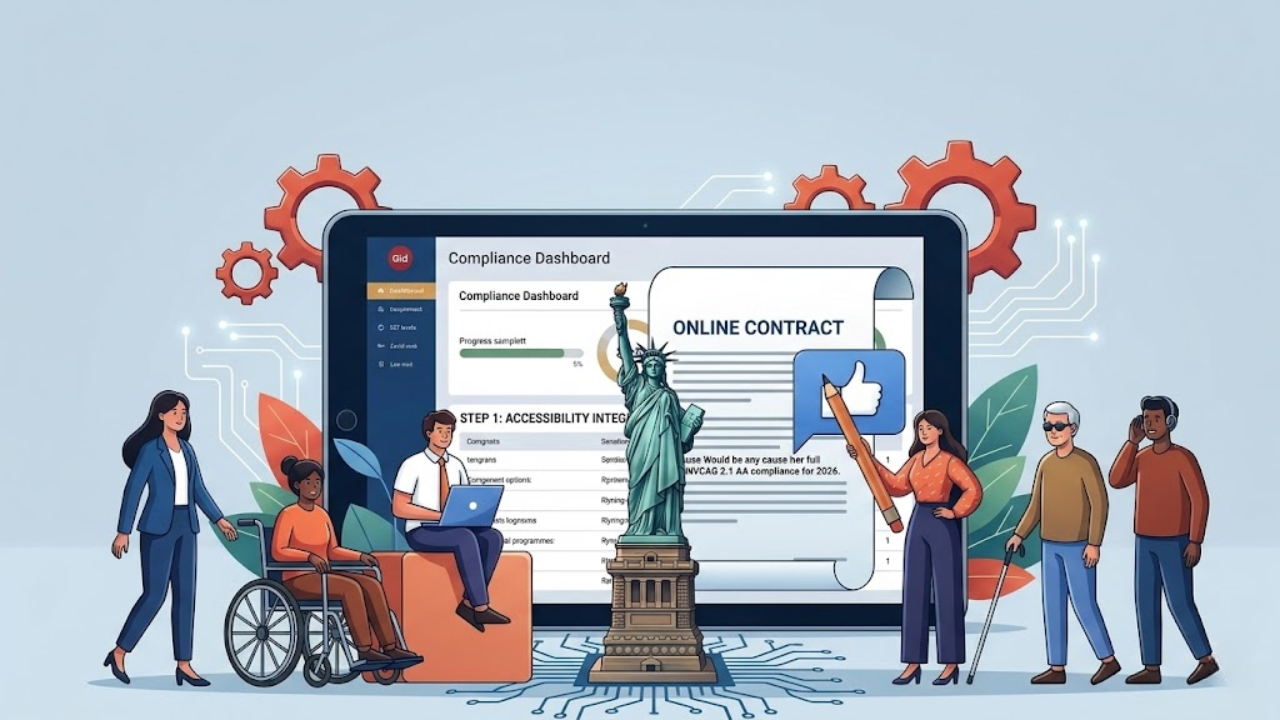
What Is Digital Accessibility Compliance and Why Does New York Make It Essential
Digital accessibility compliance means your website can be used by people with disabilities - those who rely on screen readers, keyboard navigation, captions, voice control, or other assistive technologies to interact with digital content. The technical standard that defines compliance is WCAG: the Web Content Accessibility Guidelines, published by the World Wide Web Consortium.
WCAG is built around four principles. Content must be Perceivable, Operable, Understandable, and Robust - commonly referred to as the POUR model. Within that framework, Level AA is the compliance target recognized by courts, the Department of Justice, and most regulatory bodies in the United States.
New York makes this urgent for a specific reason: between its state laws, vendor requirements, and the volume of plaintiff activity in its courts, it operates as the most legally active accessibility jurisdiction in the country. Six of the ten law firms driving the majority of ADA plaintiff website suits are New York-based. Companies doing business in the state can be sued there regardless of where they are headquartered.
The New York Accessibility Laws That Apply in 2026
New York digital accessibility obligations come from four overlapping sources. Understanding each one clarifies your actual exposure.
ADA Title II - State and Local Government
The Department of Justice finalized a rule in April 2024 requiring state and local government entities to meet WCAG 2.1 Level AA standards. The compliance deadline is April 24, 2026 for entities serving populations of 50,000 or more. Smaller public entities have until April 26, 2027. This covers city agencies, public universities, school districts, libraries, parks departments, and utility portals. Non-compliance exposes public entities to DOJ enforcement and private lawsuits with potential federal penalties up to $150,000 per violation.
ADA Title III - Private Businesses
Title III extends accessibility obligations to private businesses classified as places of public accommodation - e-commerce stores, SaaS platforms, healthcare portals, financial services, restaurants, hotels, and any website serving the general public. Courts have consistently applied this to digital environments. WCAG 2.1 Level AA is the standard of proof referenced in litigation. There is no fixed compliance deadline for private businesses - your exposure is ongoing and active.
New York Senate Bill S3114A
Signed into law in December 2023 and effective June 2024, S3114A requires all New York state agencies to conform to the most current WCAG version - which means WCAG 2.2. This was the first New York legislation to establish WCAG as a formal legal requirement for state entities.
New York Assembly Bill 8453 / Executive Law Section 170-F
This is the provision private businesses most frequently overlook. AB 8453 extended accessibility requirements to every state government contractor, subcontractor, vendor, and consultant. If your company holds any contract with a New York state agency, your website must comply with the most current WCAG standards - currently WCAG 2.2. It is a direct legal obligation, not a litigation risk.
NYC Accessibility Regulations: What WCAG 2.1 AA Actually Requires
Knowing you need to meet WCAG is one thing. Knowing what it demands in practice is another.
At Level AA, your site must provide alternative text for all informational images, captions and transcripts for video content, and a minimum color contrast ratio of 4.5:1 for text against its background. Every interactive element must be operable by keyboard alone. Forms must include visible focus indicators, clear error messages, and correction guidance. Your page structure must use semantic HTML - proper heading hierarchy, landmark elements, descriptive link text - so that screen readers and assistive technologies can accurately interpret your content.
One important thing to understand about web accessibility laws in New York: automated scanning tools identify only 30-40% of WCAG issues. The rest are required to be reviewed manually by the accessibility experts and actual testing by the users of assistive technologies. That is why accessibility overlay widgets always underperform legally. In the first half of 2025, 22.6% of all ADA digital lawsuits – 456 cases in total – were filed against websites that already offered widgets to be installed.
Web accessibility audits combine automated scanning, expert manual review, and assistive technology testing to give you a complete picture of what needs to change.
Start your accessibility audit today—because unresolved issues can expose your website to legal complaints, penalties, and compliance violations.
How to Make a Website Accessible: A Practical Starting Point
For New York businesses working toward compliance, the path follows four clear steps.
Audit first. You need an accurate baseline - what is broken, how severe, and where your legal exposure sits. Not a browser plugin scan. A certified accessibility expert reviewing your code, user flows, and content against WCAG criteria. web accessibility audits do exactly this, combining automated scanning, expert manual review, and assistive technology testing.
Remediate in priority order. Fix issues that block users from completing core tasks - checkout flows, form submissions, navigation - first. These are also the pages plaintiff attorneys test when building a case.
Document your work. Audit reports, remediation logs, and a published accessibility statement are not optional extras. They are evidence of good-faith effort - and they matter in court.
Monitor continuously. Every content update, new feature, or third-party integration can introduce new barriers. Ongoing monitoring is what keeps your compliance current, not just at audit time.
Understanding WCAG requirements in practical terms helps clarify what compliance actually looks like. Reviewing essential accessibility features can also provide a strong starting point when identifying gaps and planning remediation efforts.
The Compliance Window Is Now
Most businesses are not behind because they ignored accessibility. They are behind because the legal landscape moved faster than their processes.
The April 2026 deadlines have now started for larger public entities, which has made website accessibility a more serious topic. Even though private businesses do not have a fixed deadline, they still face ongoing risk, especially in places where accessibility cases are common.
Many small and mid-sized businesses are also getting affected, not just big companies. This shows that no business is completely safe from these issues.
Because of this, more businesses are choosing to check and improve their websites early. It helps them stay prepared and avoid problems later.
Inclusive Web helps businesses, agencies, and SaaS companies across New York build compliance programs that hold up - through every update cycle, not just at audit time. Schedule a free consultation today and get a clear picture of where your site stands.
Have Questions?
We Are Inclusive Web
We work with our clients to simplify digital accessibility to ensure your web and digital applications are ADA compliant and accessible to all your users. If you’d like to talk about your digital accessibility, you can email us at matthew@inclusiveweb.co, leave us a note here, or schedule a call here to discuss. Let’s make the web inclusive to all!