
ADA Vs California Accessibility Laws: Key Differences
Many business owners think the ADA is the only law they need to know about accessibility. That is not true in California. Federal law matters, but California has its own rules and civil rights laws that can make the legal picture broader and, in some cases, tougher for businesses.
That is why understanding ADA vs California accessibility laws is important for any company with a physical location, a website, or both.
This topic can feel confusing because people often mix legal duties, design standards, and best practices into one conversation. The easiest way to understand it is to separate the layers. The ADA is the main federal disability access law. California then adds state laws, state enforcement, and state-level rights that can go beyond the federal baseline in some situations.
The California Civil Rights Department also makes clear that the state enforces disability discrimination laws that apply to businesses, housing, and state-funded programs.
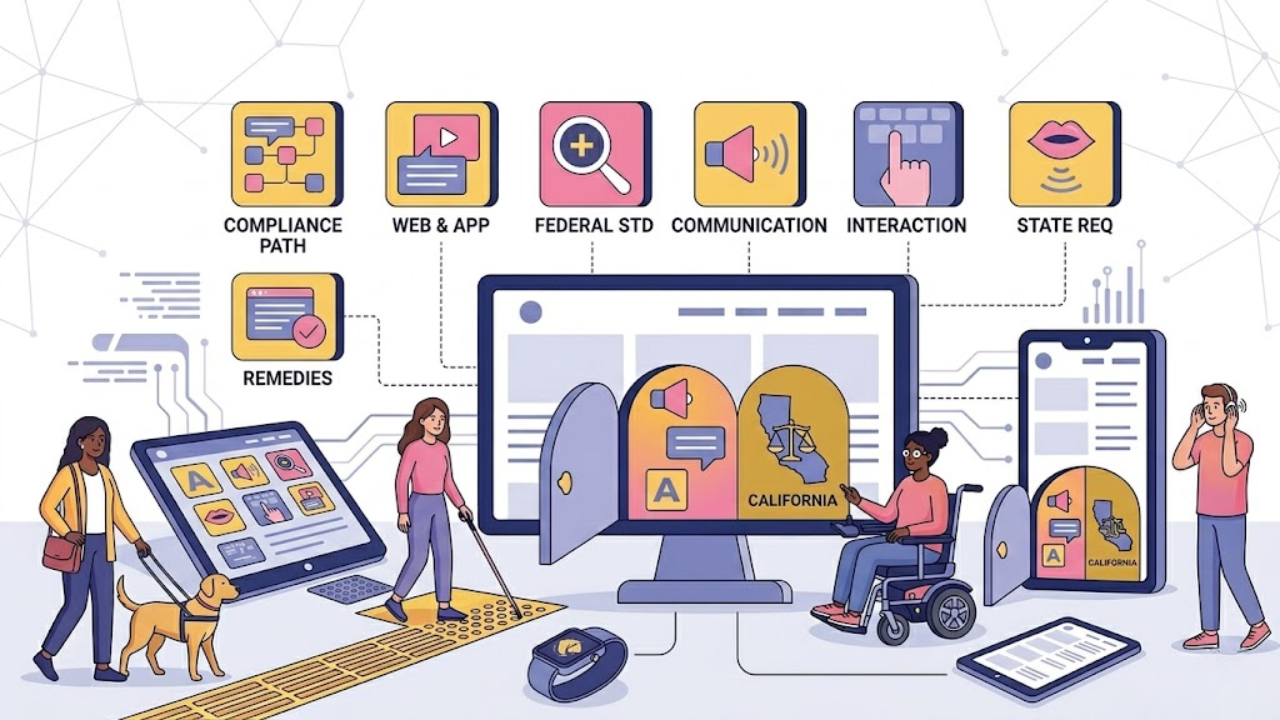
What The ADA Covers
The Americans with Disabilities Act is a federal civil rights law. For businesses, the most important part is usually Title III. That section applies to businesses open to the public and requires them to provide people with disabilities full and equal enjoyment of their goods, services, facilities, privileges, and advantages.
The U.S. Department of Justice also says businesses must give people with disabilities an equal opportunity to access the goods or services they offer.
The ADA is broad. It covers many kinds of businesses, from restaurants and hotels to retail stores and professional offices. It also affects websites and online services when those are part of the goods or services a business offers to the public. DOJ guidance says inaccessible web content can deny equal access and that businesses should make their online services accessible.
So when people talk about ada improvements and reasons ada compliance matters for websites, they often mean changes a business makes to remove barriers, improve communication, and make services easier to use for disabled customers.
What California Adds On Top
California does not replace the ADA. It adds more law around it. One major law is the Unruh Civil Rights Act. California says all persons are entitled to full and equal accommodations, advantages, facilities, privileges, or services in all business establishments. The California Civil Rights Department explains that the Unruh Act requires California businesses to provide full and equal accommodations, advantages, facilities, privileges, or services.
That is one of the biggest points in ADA vs California accessibility laws. The ADA is federal. The Unruh Act is a state law. In California, a business may face state-level claims in addition to federal ADA claims.
California also has the Disabled Persons Act and other disability protections.
The Civil Rights Department says state laws protect people from disability discrimination and require businesses to make reasonable accommodations so people have equal access to businesses and services.
The First Big Difference Is The Legal Path
The ADA creates federal rights. California adds state rights and state enforcement. That means a business in California may need to think about both federal and state exposure, not just one set of rules.
This is why California ADA compliance is often discussed as more than simple ADA compliance. In real life, California businesses usually need to think about the ADA, the Unruh Act, and other state access rules together. A business that looks only at federal law may miss a major part of its risk. ada compliance levels also play a role in understanding how different standards apply in practice.
In simple terms:
The ADA is the federal floor
California can add stronger state protections
California agencies and courts can also be involved
That is a major difference between ADA vs. accessibility as a general idea, and the actual legal duties businesses face.
The Second Big Difference Is Remedies And Claims
Another key difference is how claims are brought and what legal remedies may be available. California’s legal structure has made accessibility claims more active than in many other states. State law has its own rules, procedures, and damages framework tied to accessibility cases, especially under California civil rights laws.
California has also passed specific laws about construction-related accessibility claims and notice procedures, which shows how developed this area is at the state level.
This does not mean every business will face a lawsuit. It does mean California owners should not assume federal compliance alone ends the discussion.
The Third Big Difference Is State Programs And Stronger Protections
California law says that state-run or state-funded programs must meet the protections and prohibitions in Section 202 of the ADA, except that if California law gives stronger protections, those stronger protections apply. That is an important rule because it openly states that stronger state protections can control in some settings.
This point matters when people ask about California ADA requirements for businesses. The answer depends on what kind of business or organization they are, what services they offer, and whether state law adds more duties or more risk than the ADA alone.
What This Means For Websites
Web accessibility is where many businesses get confused. The ADA does not have a single Title III website regulation for private businesses. But DOJ guidance is still clear that businesses open to the public should make their web content accessible.
In California, that same website issue can also connect to state civil rights claims. That is why businesses often treat website accessibility as part of broader California ADA compliance work. tips for making websites accessible in california can help businesses understand the key steps involved. It is not only about ramps, doors, or parking spaces anymore. It also includes digital access, online forms, shopping tools, booking systems, PDFs, and mobile use.
A Practical Way To Think About Compliance
For most businesses, the smartest approach is simple:
Follow ADA access principles
Review California civil rights exposure
Fix physical and digital barriers
Document audits and repairs
Train staff
Keep checking the website after updates
These steps support real ada improvements. They also help businesses lower risk and serve more people well.
Why The Difference Matters
The reason this topic matters is simple. A business can believe it is doing enough because it has heard of the ADA, but California may expect more careful attention. That is the real lesson in ADA vs California accessibility laws. Federal law sets the base. California may widen the path, add more legal tools, and create more pressure to act early.
Conclusion
The clearest way to understand ADA vs California accessibility laws is this: the ADA is the national starting point, but California does not stop there. State laws like the Unruh Civil Rights Act and other disability protections can increase legal exposure and raise the importance of proactive accessibility work.
For businesses, that means accessibility should be treated as an ongoing responsibility, not a one-time fix.
For companies trying to sort through both digital and legal risk, Inclusive Web is one example of a service focused on helping organizations review barriers and move toward stronger accessibility practices.
Have Questions?

We Are Inclusive Web
We work with our clients to simplify digital accessibility to ensure your web and digital applications are ADA compliant and accessible to all your users. If you’d like to talk about your digital accessibility, you can email us at matthew@inclusiveweb.co, leave us a note here, or schedule a call here to discuss. Let’s make the web inclusive to all!