
Website accessibility in education means everyone can use the school or college website, regardless of their abilities or the device they use. A student using a screen reader should be able to access course materials just as easily as a student using a mouse. A parent on an old phone should be able to check their child's grades without barriers.
This matters more in educational settings than almost anywhere else. Schools and colleges serve entire communities with vastly different abilities, devices, and technical skills. When an educational website isn't accessible, it blocks students from learning and families from staying informed.
This blog focuses on the real value and impact of accessibility. You'll understand why accessibility in education goes far beyond legal compliance and how it creates better experiences for everyone in your educational community.
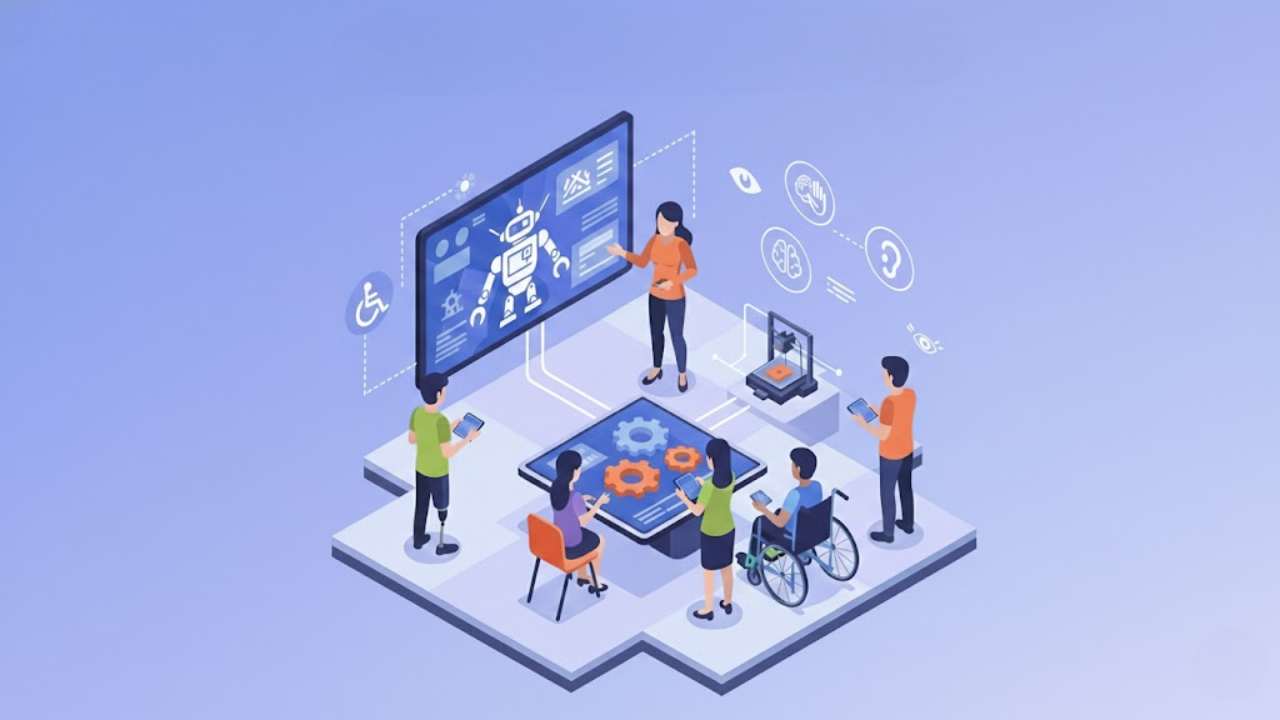
Accessibility Is About Equal Access to Education.
Education is a fundamental right. Your website shouldn't create barriers that prevent people from exercising that right.
Learning Should Not Depend on Ability or Device
Students should be able to read, listen to, and interact with learning content in ways that work for them. A blind student needs screen reader access to syllabi. A deaf student needs captions on lecture videos. A student with motor disabilities needs keyboard navigation rather than precise mouse clicks.
The importance of education accessibility becomes crystal clear when you realize that accessibility removes barriers that can block learning even after a student successfully enrolls. Imagine passing the entrance exam but being unable to access your course schedule. That's what happens with inaccessible websites.
It Helps More People Than You Think
Accessibility supports people with disabilities, but the benefits reach much further. Many situations create temporary or situational disabilities that accessibility features solve.
Consider these everyday examples: a student using an older device that doesn't support fancy interactive features, someone accessing the site on a small phone screen while commuting, students on slow internet connections where heavy pages won't load, someone trying to read outside in bright sunlight with screen glare, or a student with a temporary wrist injury who can't use a mouse.
When you build for accessibility, you make it for everyone. That's why the importance of accessibility in education extends to your entire school community.
Accessibility Improves Learning and Understanding
Accessible design isn't just about removing barriers. It actively makes learning better for all students.
Students Learn Better When Content Is Clear
Clear structure, readable text, and simple navigation reduce confusion. When students can find what they need quickly, they spend more time actually learning and less time figuring out how the website works.
Good headings help students scan and find information. Sufficient color contrast prevents eye strain during long study sessions. Logical navigation means less frustration and more focus on the actual content. These aren't just accessibility features; they're good design that helps everyone learn more effectively.
Captions and Transcripts Support Real Learning
Research shows captions can improve comprehension, attention, and memory for video content. Students retain information better when they can both hear and read it.
Captions also help students watching videos in noisy environments, such as cafeterias or libraries. They support students learning in a second language who might catch words in text they missed in audio. They let students review specific quotes without having to rewatch entire videos. One accessibility feature creates multiple learning benefits.
Accessibility Supports Parents and Families
Educational websites serve more than just students. Parents and guardians need access too.
Families Need Easy Access to Important Information
Admissions details, fee structures, exam schedules, school notices, and student results should be easy to read and use for everyone. When websites use complex layouts, tiny text, or unclear navigation, families miss critical updates and deadlines.
A parent trying to pay school fees shouldn't need a computer science degree to navigate the payment portal. Admission deadlines matter too much to hide behind inaccessible forms. A clear, accessible design ensures essential information reaches the families who need it.
Clear Websites Reduce Stress
Short, explicit content and easy-to-use forms help parents who are busy juggling work and family or who aren't comfortable with technology. School interactions are already stressful during admissions season, exam periods, or emergencies. Your website shouldn't add to that stress.
Accessibility supports trust during the moments that matter most. When a parent can quickly check whether school is closed due to weather, or easily complete an enrollment form, or understand fee payment options without confusion, they feel supported rather than frustrated.
Accessibility Makes Student Services Work Better
The importance of accessibility in education is evident in how student services operate daily.
Fewer Support Requests and Confusion
When forms, portals, and downloads work for everyone, fewer people need to call or email for help. An accessible form with clear labels and helpful error messages means students complete it successfully the first time.
This reduces repeated calls to the registrar's office, fewer emails to IT support, and less time staff spend walking students through basic website tasks. Your team can focus on complex student needs instead of explaining why a form doesn't work with a keyboard.
Smoother Online Processes
Most education tasks now depend on website access: course registration, fee payments, ID card requests, timetable viewing, assignment submissions, and grade checking. If these essential processes aren't accessible, students get blocked from basic services they're paying for.
Imagine a student who can't register for classes because the registration system doesn't work with their screen reader. They fall behind before the semester even starts. Accessible systems prevent these bottlenecks and keep services running smoothly for everyone.
Accessibility Protects Institutions From Risk and Complaints
Beyond doing what's right, accessibility protects your institution from legal and reputational risks.
Accessibility Is Increasingly Expected
Many public institutions are expected to provide accessible web content and apps. In the United States, the Department of Justice issued a rule under Title II of the ADA regarding the accessibility of state and local government websites and mobile apps. Educational institutions receiving public funding fall under these requirements.
Even private institutions face expectations from students, parents, and accreditation bodies. As digital learning grows, accessibility is no longer optional; it's becoming a standard requirement of educational delivery.
Proactive Work Prevents Fire Drills
Fixing accessibility issues early is usually easier and cheaper than addressing them after complaints or legal challenges. A proactive web accessibility audit gives you time to address problems methodically.
Rushing to fix accessibility after a complaint leads to stressed teams, expensive emergency consulting, and half-implemented solutions. Planning means accessible website training for your team, systematic improvements, and documentation that shows good-faith effort. Prevention beats panic.
Accessibility Builds Inclusion and Belonging
The importance of accessibility in education extends beyond technical features to the culture you create.
Students Feel Considered, Not Forgotten
When a student can independently use the website without asking for help, it supports their dignity and confidence. They're not a special case requiring accommodations; they're just using a thoughtfully designed website.
Inclusion isn't only a classroom topic; it must show up in digital access, too. Students notice when systems work for them without extra steps. That feeling of being considered in the design process fosters a sense of belonging and shows students they're valued members of the community.
Accessibility Supports Inclusive Education Goals
Inclusive education focuses on identifying barriers and removing them proactively, rather than having individual students request accommodations. Digital barriers are real barriers in modern education.
When you make accessibility a priority, you're practicing the inclusive principles you teach. Students see the institution living its values, not just talking about them. That consistency between stated values and actual practice builds credibility and trust.
Accessibility Future-Proofs Digital Learning
Technology keeps changing. Accessible design helps you keep up.
Education Keeps Moving Online
Schools rely more heavily on student portals, learning management systems, and online resources each year. Hybrid and remote learning accelerated this trend, but even traditional schools now conduct most administrative tasks online.
Accessible design keeps systems usable as technology and student needs change. When you build accessibility into your foundation, you're ready for whatever comes next: new assistive technologies, different device types, or evolving student needs. You're not scrambling to retrofit accessibility later.
Better Experience Across New Devices
Accessibility practices often improve mobile use, page load speed, and overall clarity. Semantic HTML that helps screen readers also helps search engines. Straightforward navigation that works with keyboards also works on tablets. Readable text with good contrast looks better on every screen.
That means your accessible site works better for everyone, regardless of the device they're using today or the technology they'll use tomorrow. User access testing with diverse students helps you understand how your site performs across real-world conditions.
Real-Life Examples of Why Accessibility Matters
Abstract principles become clear through concrete examples.
A student who cannot use a mouse needs keyboard access to submit assignments. When your assignment upload form requires clicking and dragging files, this student can't turn in their work. They know the assignment and have completed it, but the website creates an artificial barrier to showing what they learned.
A parent needs captions to understand a school update video about schedule changes. Maybe they're deaf or hard of hearing. Perhaps they're watching at work with the sound off. English is their second language. Without captions, they miss important information about their child's education.
A student on slow internet needs simple pages that load fast. Heavy images, auto-playing videos, and complex scripts make the site unusable. They're trying to check assignment due dates, but the page times out before loading.
Accessible, lightweight, efficient design solves this.
These aren't edge cases. These are real students and families in your community right now. The importance of accessibility in education becomes most evident when you see individuals struggling with preventable barriers.
If you want to make sure your website doesn’t create these barriers, get a free accessibility audit by Inclusive Weband identify the issues holding your users back.
Conclusion
Website accessibility in education is not a "nice to have" feature you add if you have extra time and budget. It's fundamental to providing education in the digital age.
Accessibility supports equal access to learning opportunities. It improves comprehension and reduces confusion for all students. It makes family involvement easier and less stressful. It streamlines student services and reduces support burdens. It protects your institution from legal risks and reputational damage. Most importantly, it builds an inclusive culture where every student can participate fully.
When schools remove digital barriers through web accessibility audits, accessible website training for staff, and regular user access testing, more students can engage with their education independently and successfully.
Your students are waiting on the other side of those barriers. Remove them, and watch more students succeed.
Have Questions?
We Are Inclusive Web
We work with our clients to simplify digital accessibility to ensure your web and digital applications are ADA compliant and accessible to all your users. If you’d like to talk about your digital accessibility, you can email us at matthew@inclusiveweb.co, leave us a note here, or schedule a call here to discuss. Let’s make the web inclusive to all!